
About Leah
Relationships are not meant to be so hard.

Leah Parker, LPC
__________________________
WHO I WORK WITH
Adults · Couples
AREAS OF FOCUS
Specialties
• Complex Relational Trauma
• Couples Therapy
• Discernment Counseling
• Betrayal Trauma
• Sex and Intimacy
• Perinatal and Postpartum Mental Health
• Military and Veteran Individuals and Couples
Issues
• Attachment and Relationship Patterns
• Recurring Conflict and Disconnection
• Fear of Vulnerability and Rejection
• Highly Sensitive Person (HSP)
• Perfectionism & Self-Worth
• Burnout and Invisible Load
• New Parents and Parenting
SESSION RATES
Individual: $ 185 / 60 minutes
Couples: $ 300 / 90 minutes
Maybe it’s a new face, but the same type. Or you’re years into a relationship and still having the same fight you’ve had a hundred times. Either way, you keep landing in the same relational patterns.
All you want is to feel close, understood, and loved. But one shift in their tone and you’re already bracing. You replay the text you sent, wondering if it was too much. You get defensive, pull away, or work even harder to prove you’re enough. At some point, you start to wonder, “Is there something wrong with me?”
When we slow down and look closer, these patterns start to make sense. There’s a reason certain dynamics feel familiar, why vulnerability feels risky, and why you might work so hard to feel chosen while struggling to trust you’ll stay that way.
I help individuals and couples understand the protective patterns underneath the hurt, so you can stop repeating them and start choosing differently.
Whether you come on your own or with your partner, we explore what keeps pulling you back into those patterns, including what your body and nervous system came to expect. Together, we make room for the feelings and needs you learned to put away, building self-trust and compassion for the parts of you that have worked so hard to keep you safe.
Over time, closeness can stop feeling like something you have to earn. You can let people in without bracing for rejection, and trust that you are loved for who you are, not for what you have to offer.
My Approach
I’m warm, active, and direct with a dash of humor. I’ll ask questions, share what I’m noticing, and compassionately call you out when you minimize your pain, talk around the real thing, or go easier on everyone but yourself.
I also want to know when something doesn’t fit or I’ve missed the mark. Your experience matters, including your experience of working with me.
I approach this work through a complex trauma lens, with particular attention to what happened when you had feelings or needs in your earliest relationships.
Was there room to be angry, hurt, afraid, or need someone? What did you learn to do when there wasn’t? Together, we explore how those experiences show up now, including in the ways you relate to yourself.
As a Master NARM Therapist, I pay attention to what happens as we talk: what you notice in your body, the feelings that come up, and the moments you want to pull away or explain them away. We make room for emotional responses you may not have been able to fully feel or express when you were younger.
With couples, I’m equal parts therapist and coach. I’ll help you slow the conflict down enough to understand what’s happening for each of you. I’ll speak honestly to you both and hold you accountable with care.
We’ll look at how you protect yourselves and how those responses impact each of you, and I’ll coach you toward new ways of showing up for one another.
I’m warm, active, and direct with a dash of humor. I’ll ask questions, share what I’m noticing, and compassionately call you out when you minimize your pain, talk around the real thing, or go easier on everyone but yourself. I also want to know when something doesn’t fit or I’ve missed the mark. Your experience matters, including your experience of working with me.
I approach this work through a complex trauma lens, with particular attention to what happened when you had feelings or needs in your earliest relationships. Was there room to be angry, hurt, afraid, or need someone? What did you learn to do when there wasn’t? Together, we explore how those experiences show up now, including in the ways you relate to yourself.
As a Master NARM Therapist, I pay attention to what happens as we talk: what you notice in your body, the feelings that come up, and the moments you want to pull away or explain them away. We make room for emotional responses you may not have been able to fully feel or express when you were younger.
With couples, I’m equal parts therapist and coach. I’ll help you slow the conflict down enough to understand what’s happening for each of you. I’ll speak honestly to you both and hold you accountable with care. We’ll look at how you protect yourselves and how those responses impact each of you, and I’ll coach you toward new ways of showing up for one another.
My Background
My path to becoming a therapist began on the other side of the room. For a long time, I deeply wanted connection but struggled to let people get close. I kept others at arm’s length, afraid that if I showed my true self, I wouldn’t be accepted. I tried to earn love through how I looked, what I accomplished, and how well I could keep everything together.
I spent a decade in the Marine Corps, and it shaped who I believed I had to be: strong, capable, and always holding it together. Then I had a baby, left the military, and ended a long-term relationship. Leaving the Marines meant losing more than a job. It meant losing the structure, purpose, and identity I had built my sense of self around. Without them, those old patterns came into sharp focus, and by the time I reached out for help, I felt lost, like the walls were collapsing in on me.
Looking back, that pain became the catalyst for real change. Therapy gave me space to work through grief and anger I had carried since childhood, the belief that I wasn’t lovable, and the perfectionism I used to try to be enough. Along the way, I realized these patterns weren’t who I was. They were learned, which meant they could change.
That work transformed my relationship with myself, my partner, and my children. It gave me a deeper capacity for connection than I ever thought possible, and it inspired me to become a therapist.
My own history drew me to specialize in complex relational trauma, which led me to become a Certified NARM Therapist. NARM was developed specifically for complex trauma and focuses on how early relationships shape our sense of self and our capacity for connection.
That training gives me a foundation for the work, but I consider my own healing one of the greatest assets I bring into the room. I know what it feels like to want something different and still find yourself caught in the same old cycles. I also know the vulnerability of letting someone see what you’ve worked so hard to hide.
My story is different from yours, but I know this much: no matter where you come from or what you’ve been through, deeper connection is possible.
My path to becoming a therapist began with being on the other side of the room. My own therapy changed how I related to myself, my partner, and my children.
Experiencing that change inspired me to earn my master’s degree in Counseling from St. Edward’s University and pursue further training in complex trauma, relationships, and perinatal mental health.
I consider my own healing one of the greatest assets I bring into the room. It shapes the honesty, compassion, and willingness to stay with difficult feelings that I bring to our work together.
Read More About My Journey
My path to becoming a therapist began on the other side of the room. For a long time, I deeply wanted connection but struggled to let people get close.
I kept others at arm’s length, afraid that if I showed my true self, I wouldn’t be accepted. I tried to earn love through how I looked, what I accomplished, and how well I could keep everything together.
I spent a decade in the Marine Corps, and it shaped who I believed I had to be: strong, capable, and always holding it together. Then I had a baby, left the military, and ended a long-term relationship.
Leaving the Marines meant losing more than a job. It meant losing the structure, purpose, and identity I had built my sense of self around. Without them, those old patterns came into sharp focus, and by the time I reached out for help, I felt lost.
Therapy gave me space to work through grief and anger I had carried since childhood, the belief that I wasn’t lovable, and the perfectionism I used to try to be enough.
That work transformed my relationship with myself, my partner, and my children.
Experiencing that change inspired me to become a therapist. My own history drew me to specialize in complex relational trauma, which led me to become a Certified NARM Therapist.
NARM was developed specifically for complex trauma and focuses on how early relationships shape our sense of self and our capacity for connection.
That training gives me a foundation for the work, but I consider my own healing one of the greatest assets I bring into the room.
I know what it feels like to want something different and still find yourself caught in the same old cycles. I also know the vulnerability of letting someone see what you’ve worked so hard to hide.
My story is different from yours, but it shapes the honesty, compassion, and willingness to stay with difficult feelings that I bring to our work together.
Therapeutic Approaches
NeuroAffective Relational Model (NARM)
Developed for complex and developmental trauma, NARM explores how early relationships shape our sense of self and capacity for connection. It brings attention to protective patterns that once helped us survive but may now get in the way of intimacy, self-trust, and expressing our needs.
Internal Family Systems (IFS)
IFS views our inner world as made up of different parts, each with its own feelings, needs, and protective roles. It explores how these parts respond to trauma and painful experiences, encouraging greater self-understanding and compassion.
Relational Life Therapy (RLT)
An approach to couples therapy that addresses recurring conflict, emotional distance, and patterns that interfere with intimacy. It combines understanding how those patterns developed with personal accountability and practical relationship skills.
Coherence Therapy
An approach that explores the emotional learning underlying persistent symptoms and patterns. It helps bring that learning into awareness and encounter experiences that challenge it, creating opportunities for change.
Experiential Therapy
Experiential therapy uses sandtray, art, mindfulness, and hypnotherapy to explore feelings and experiences beyond talking alone. These methods engage imagery, creativity, focused attention, and present-moment awareness to support emotional exploration and new perspectives.
Somatic Therapy
Somatic approaches include the body in the therapeutic process, bringing attention to sensations, tension, movement, and physical responses to stress. They support greater awareness of how emotional experiences show up in the body.
Training & Education
Education
• Master of Arts in Counseling, St. Edward’s University, 2017
• Bachelor of Arts in Psychology, Columbia College, 2015
Trauma & Relational Therapy
• NeuroAffective Relational Model (NARM), Levels 1, 2, and 3 (Masters), 2020 -2023
• Interpersonal Neurobiology, supervision with Juliane Taylor-Shore, LPC-S, LMFT-S, SEP, 2018-2023
• Heart of Trauma with Dr. Bonnie Badenoch, 2022
• Emotional Transformative Therapy, 2021
• Introduction to Internal Family Systems Therapy (IFS), 2023
Couples Therapy
• Relational Life Therapy for Couples, 2022
Perinatal Mental Health & Integrative Wellness
• Maternal Mental Health Intensive Training: Perinatal Mood & Anxiety Disorders; Perinatal Grief & Loss, 2019
• Integrative Mental Health Professional Certification Training Course, 2019
• Postpartum Nutrition Certification, 2018
• Prenatal Yoga Certification, 2018
License & Profiles
• Licensed by the State of Texas # 81722
Outside the Therapy Room
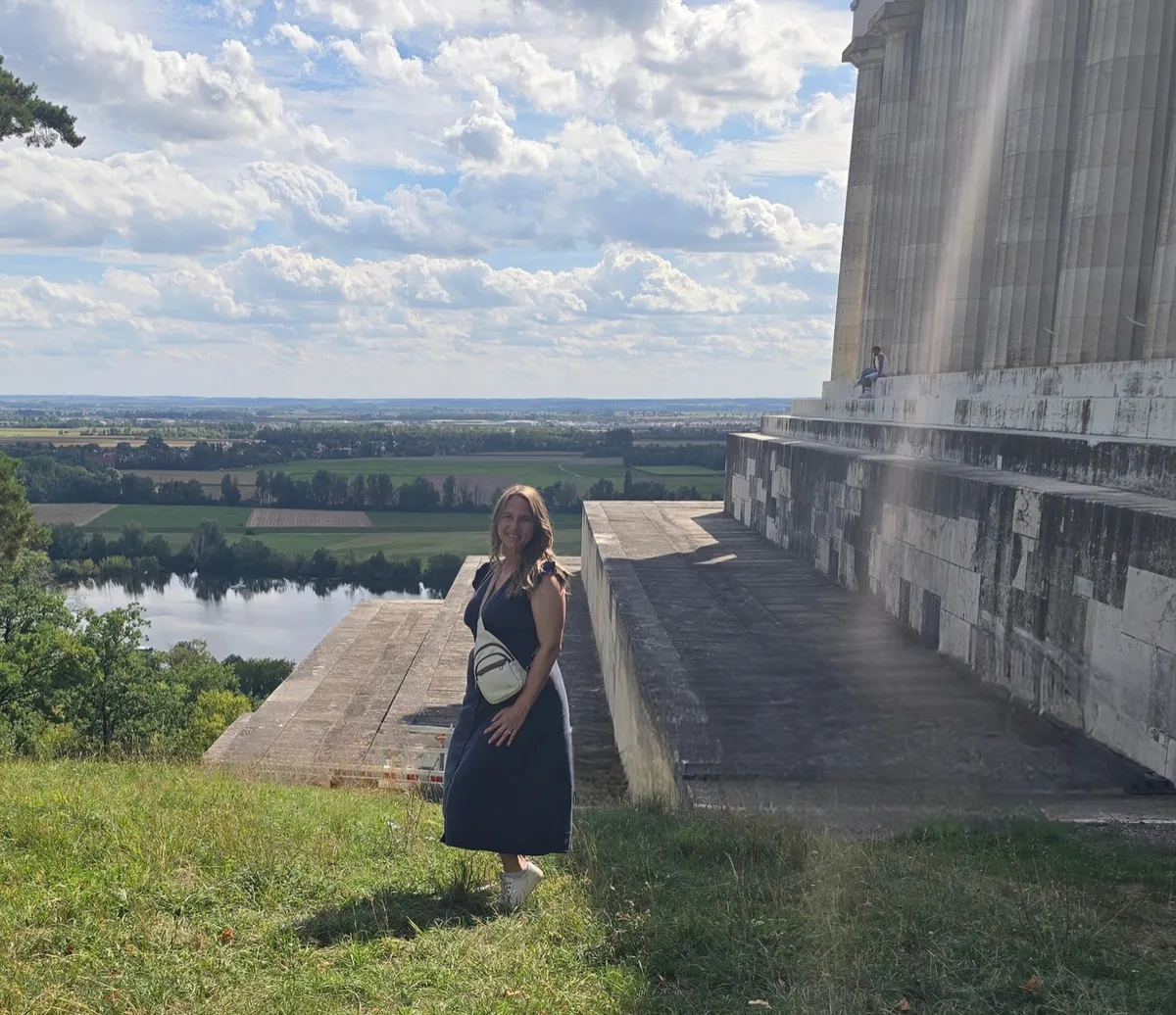
Outside the Therapy Room
Outside the
Therapy Room
Exploring new places is my favorite hobby.
I love traveling, hiking, and going on adventures with my boys.
I might also be a bit of an adrenaline junkie. I’ve been skydiving twice, gone parasailing, and rode an R6 motorcycle for years.
When I’m slowing down, I enjoy crafting and getting lost in a good book.
And I might be a little addicted to trainings. There’s usually something new I’m learning or signing up for.
Let’s Find Your Starting Point
You don’t need to know exactly what to say or where to begin.
A consultation gives us a chance to connect, talk about what brings you in,
and see whether working together feels like a good fit.
You don’t need to know exactly what to say or where to begin.
A consultation gives us a chance to connect, talk about what brings you in, and see whether working together feels like a good fit.
video proof
Add some video testimonials if you have them. They are really powerful.
DOWNLOAD THE journal
Get started with my top free Self-Compassion Journal
Observant Mind
Integrative
Therapy + Wellness
South Austin
© Observant Mind | ALL RIGHTS RESERVED | TERMS & CONDITIONS
Good faith estimate | no surprises act | privacy policy